L’art surprend l’éclipse (Art surprise the eclipse)

A phenomenon tied to anticipation, the passage of time, surprise, appearance, masking, and light, the eclipse challenges artists such as François Morellet and Felice Varini by offering them the opportunity to create site-specific works that blend art with an astronomical event.

Bertrand Lavier, Felice Varini…


« A dungeon, a fragmentation and a few reflections », François Morellet, neon lights, old chimney of the main building, 1999.
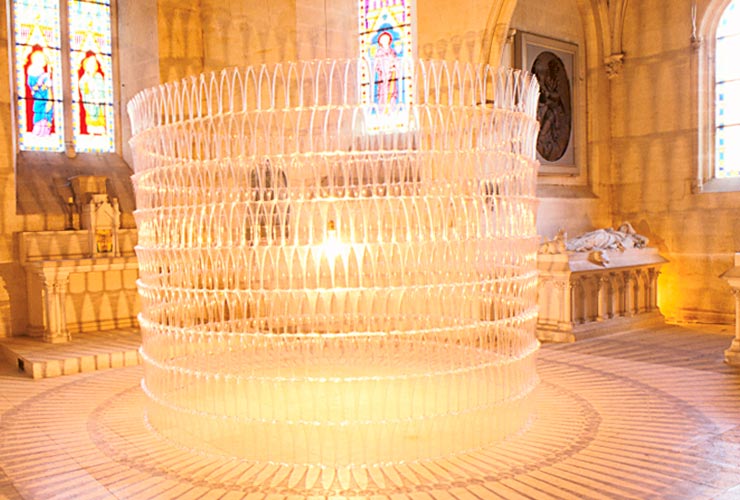


“Trink, trink, Brüderlein trink...”, Markus Hansen, one thousand, two hundred and fifty six champagne flutes, light bulb, 1999.


“Chambre d’éclipse”, Jean-Bernard Metais, Galvanized and painted industrial steel fabrication, aluminized solar film, 1999.


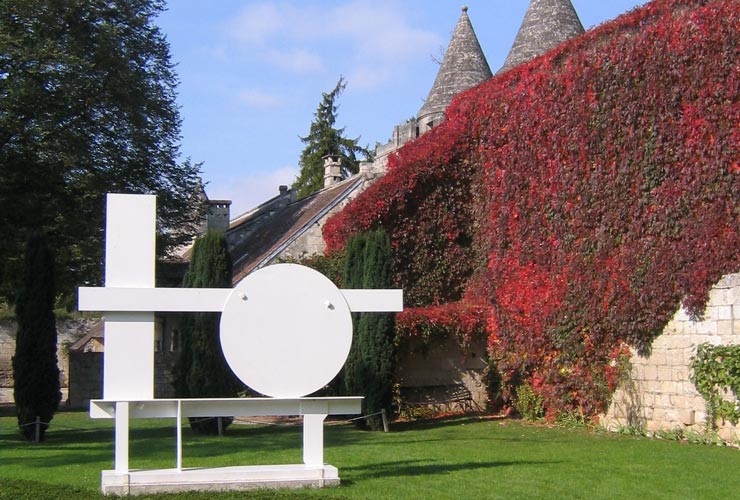
“Une et une...deux”, Felice Varini, anamorphose, white chalk, 1999.


Lighting installation, Collection of the Fonds National d’Art Contemporain, Ministère de la Culture, 1999.


“Soy y luna a la vez”, François Morellet, two neon lights, 1999.
 

Featured Image

Machins / Machines

Machins / Machines :  Gizmos / Machines

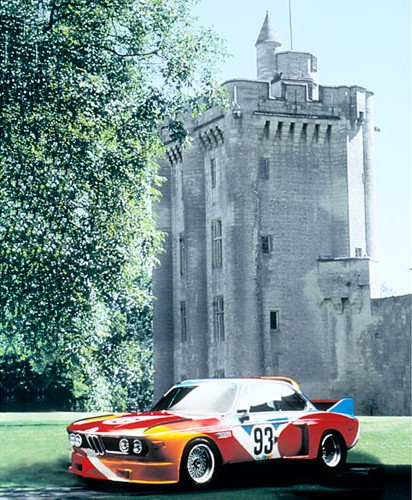
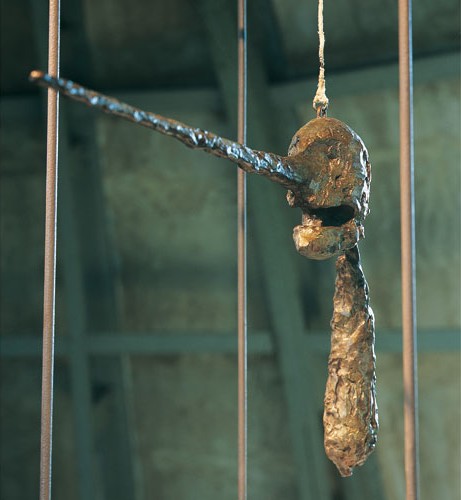
This exhibition invites the public to explore how machines have been perceived, from the time of Leonardo da Vinci to the creations of Calder—offering a glimpse into the evolution of an object that has fascinated the world throughout history.

Yves Klein, Arman, César, Jean Tinguely, Vassilakis Takis…


Alexander Calder


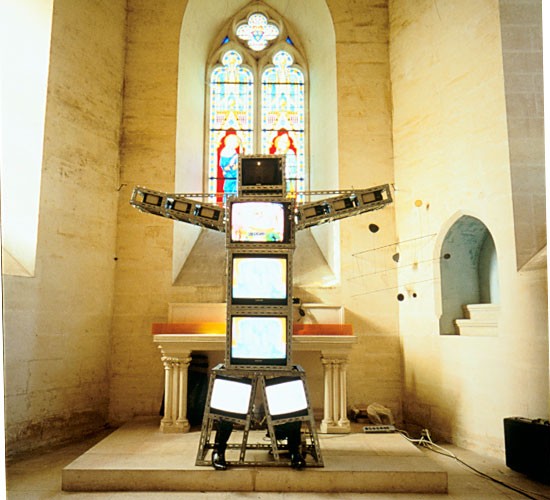
Nam June Paik

Featured Image

Pour l’Amour de Vénus

Pour l’Amour de Vénus : For the love of Venus

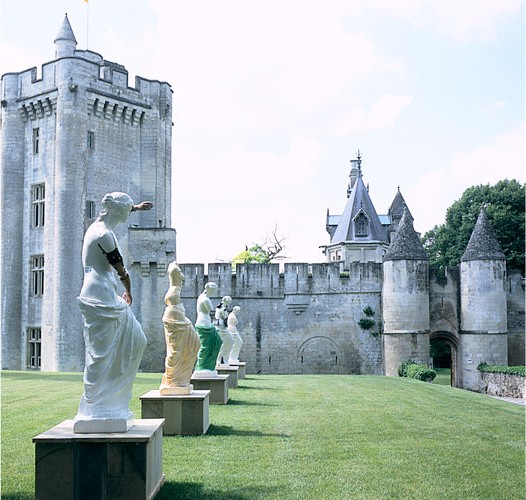
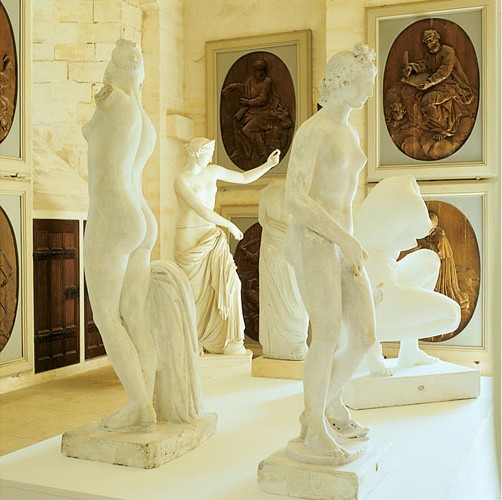
After having journeyed through the ages, the figure of Venus now takes up residence at the Donjon de Vez.

As part of the exhibition For the Love of Venus, the multifaceted goddess becomes the subject of a carte blanche extended to five artists: Ben, Vincent Corpet, Fabrice Hybert, Stéphane Pencréac’h, and Bernard Rancillac. Each received a life-sized plaster reproduction of the Venus de Milo, produced by the casting workshop of the Louvre and France’s national museums, and was given full freedom to reinterpret the classical icon.

Whether we speak of what are commonly called prehistoric Venuses, Cycladic Venuses, or African Venuses, they all ultimately speak to us of the same thing: an idea of woman and desire—an ideal that has constantly evolved throughout the centuries.

Salvador Dali, Arman, Yayoi Kusama, Yves Klein…