Featured Image

American Sculpture at the Donjon II

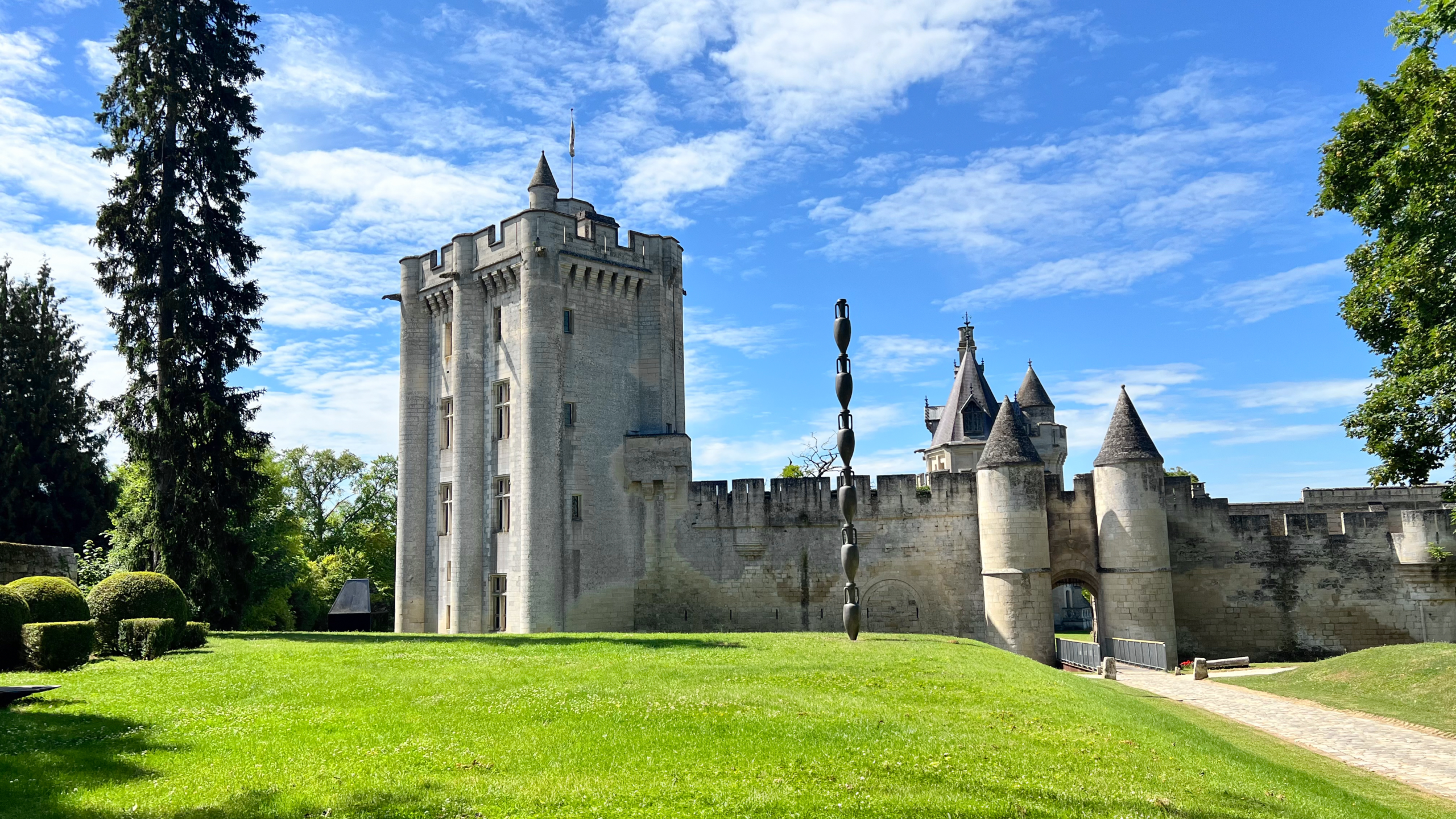
The exhibition "American Sculpture at the Donjon" continues in 2005 for a second season, bringing together the works of fourteen artists—mostly American or living in New York, such as the French artists Bernar Venet and Alain Kirili. It spans forty years of artistic creation, from Primo Piano III by David Smith (1962) to Monk by George Condo (2002).

Some pieces are familiar to the French public, such as Calder’s Stabile, Mark di Suvero’s L’Étoile du Jour, or the minimalist sculptures displayed in the Guards’ Room.

Others are more unusual and reveal lesser-known aspects of a rich history: the pioneering work of David Smith, that of Robert Indiana—a pop art figure—or Joel Shapiro’s sculptures. These works reflect both a culture—through word sculptures, number sculptures, or references to European art—and a true renewal of American sculpture beginning in the 1960s, with the rise of large-scale constructed sculpture in the United States.



MARK DI SUVERO, Krofted (1995)


SOL LEWITT, Sans titre (1966-68)


BERNAR VENET, Arcs sculptures (2000)

BERNAR VENET, Arcs sculptures (2000)


Featured Image

Tadashi Kawamata

In 2009, the Donjon of Vez hosted an in situ installation by Japanese artist Tadashi Kawamata. In the maple trees of the castle’s lower courtyard—once home to the stables and storage buildings—the artist suspended three wooden huts. These structures, inaccessible to humans, were built from salvaged materials—planks, crates, reclaimed wood—a process typical of his artistic approach.

Kawamata, born in Tokyo in 1953, has made a name for himself on the international art scene with his raw wood installations that oscillate between sculpture, humble architecture, and contextual art. With these huts nestled in the trees that challenge the traditional garden, the artist invites us to shift our perception of the space and experience it in a new way.


TADASHI KAWAMATA, Tree Huts (2009) © Athis Hourdry - Soyez

TADASHI KAWAMATA, Tree Huts (2009) © Athis Hourdry - Soyez


TADASHI KAWAMATA, Tree Huts (2009) © Athis Hourdry - Soyez


TADASHI KAWAMATA, Tree Huts (2009) © Athis Hourdry - Soyez

TADASHI KAWAMATA, Tree Huts (2009) © Athis Hourdry - Soyez

Featured Image

Robert Couturier - La Poésie des Corps (THE POETRY OF BODIES)

This summer, the Donjon de Vez presents the first major retrospective dedicated to Robert Couturier since 2005. Considered one of the most important post-war sculptors in France—alongside artists like Alberto Giacometti and Germaine Richier—Robert Couturier returns to the spotlight with around twenty monumental, life-size sculptures, displayed throughout the gardens and rooms of the Donjon.


La Savonnette - Robert Couturier

La Savonnette - Robert Couturier

The twenty sculptures by Robert Couturier (1905–2008) on view offer a retrospective of an artist who was both a major figure and a witness to a 20th century marked by the avant-garde and profound artistic upheavals.

For over sixty years, in the quiet of his studio in the Villa Seurat in Paris, Couturier devoted himself to the human body—especially the female body—as his primary material.

Trained in drawing and lithography, he developed a sculptural language that began in the footsteps of Aristide Maillol, whom he met in 1928 and whose influence marked his early work. Maillol’s death in 1944 coincided with Couturier’s decisive emancipation. From then on, he committed himself to creating an “anti-Maillol,” combining void and solid, visible and invisible, interior and exterior space—in representations of the human figure, which he would never abandon.

His transition to a language of his own occurred when he began to suggest forms rather than impose them visually, while preserving a sense of fullness. He spoke of “open form,” where air and light move freely.

Taking the opposite approach of additive sculpture, Couturier chose to eliminate, remove, carve out and hollow the material so that form could emerge. This “anti-sculpture” embodies a metamorphosis of the body: along the viewer’s line of sight, the perception changes as the viewer moves.

This “sculptural draftsman” confronted real space directly and played with the balance of forces, suggesting forms that hover between presence and absence. The viewer is drawn into the work—the spectator becomes a participant, guided by what the piece offers.

Robert Couturier’s work is grounded in everyday life and poetic simplicity.

This exhibition is made possible with the support of Galerie Dina Vierny, representing the artist’s estate.

BIOGRAPHY

Born in 1905 in Angoulême, Robert Couturier studied lithography in Paris and soon caught the attention of Aristide Maillol in 1928, becoming his student and friend. In the 1930s, he won the Blumenthal Prize and participated in group exhibitions in Parisian galleries. In 1936, on the occasion of the 1937 World’s Fair, he received a commission for The Gardener, installed on the Trocadéro esplanade in Paris, and created all the sculptures and decorations for the Pavilion of Elegance, designed by Émile Aillaud.

In 1938, he co-signed the Rupture manifesto with the groups Forces Nouvelles and Nouvelle Génération. The manifesto advocated a return to traditional craftsmanship and artistic values. Their aim was to renew the representation of the human figure, and this aesthetic movement had an international impact.

Captured during World War II, Couturier managed to escape and later became one of the founding members of the Salon de Mai in 1943. After the war, in 1946, he was appointed professor at the École Nationale des Beaux-Arts.

Couturier held his first solo exhibition in London in 1947 and participated in major shows in 1948–1949 that brought together past and new generations of sculptors in Bern and Amsterdam. He represented French sculpture at the Venice Biennale (1950), the São Paulo Biennial (1951), and participated in Sonsbeek (1952) and Antwerp (1953).

The Musée Rodin organized his first retrospective in 1970, followed in 1975 by the Monnaie de Paris, which presented a major collection of his sculptures, drawings, and medals.

To mark his 100th birthday, the Fondation Dina Vierny – Musée Maillol in Paris dedicated a retrospective to him. He was also named Officer of Arts and Letters. He passed away on October 1st, 2008, at the age of 103, leaving behind a body of work consisting of over 500 sculptures.

Blending tradition and modernity, Robert Couturier offered a new interpretation of the human figure. As the inventor of “allusive” sculpture, he moved away from classical forms to bring renewal. The female figure was his main source of inspiration. With a single line, he could suggest the whole body, using a varied language of elongated, full, or hollow shapes.

His dynamic works seek a dialogue between form and space. He played with materials—plaster, bronze, stone—and integrated everyday objects into his sculptures. Couturier’s works establish a rhythm between form and matter, a delicate balance that offers great interpretive freedom.

Robert Couturier, Jeune fille lamelliforme, 1950, bronze, 115 x 45.5 x 70 cm (courtesy Gelrie Dina Vierny © Jean-Louis Losi).


Robert Couturier dans son atelier, juillet 1997 (Photo © Jean-François Bonhomme)


Robert Couturier, Hommage à Millet, 1994, Bronze, 75.5 x 27.5 x 14.5 cm, (Photo Courtesy Galerie Dina Vierny © Jean-Louis Losi)


s

Robert Couturier, Torse concave, 1966, Bronze, 177 x 25 x 28 cm ( Photo Courtesy Galerie Dina Vierny © Jean-Louis Losi)

Featured Image

Exhibition « Femmes Sculptées » (Sculpted Women)

The Donjon de Vez presents a collection of fifteen significant works of modern and contemporary art. It offers an overview of the representation of women, as sculpted by artists such as Aristide Maillol, Niki de Saint Phalle, Manolo Valdés, Antonacci Volti, Salvador Dalí, Germaine Richier, Robert Couturier, Jeff Koons, John de Andrea, Antoine Bourdelle and Emmanuel Frémiet, using various materials (bronze, stone, resin, metal...).

Aristide Maillol (1861-1944) Vénus sans bras, 1922 (Bronze) Private Collection

For centuries, from Antiquity to the end of the 19th century, female sculptures populated gardens, churches, public squares, and interiors. Often, their bodies were an allegory of love and war, to magnify history or in reference to ancient times.

John de Andrea (b. 1941), Katie (Seated), 1998, Private Collection particulière

Starting from the early 20th century, women emancipated and strengthened, and artists accompanied this evolution by transforming their representation according to their thoughts, new materials, and their travels around the world. Moreover, the successive arrival of photography and cinematography further evolved the clichés related to beauty.

Robert Couturier (1905-2009), La Savonnette, 1994 (Bronze), Private Collection

While Niki de Saint Phalle’s colorful "Nanas" anticipated feminist liberation movements, the sculptures of virgins in churches remain imprisoned in a profoundly reductive role of motherhood. If Jeff Koons, through pink metal balloons, testifies to his vision of women through the prism of a modern-day Venus, Maillol sublimates their forms and cuts their arms in a clear reference to the Venus de Milo. Finally, when Manolo Valdés showcases his Meninas at fashion week in echo of Velázquez’s, John de Andrea, the great American hyperrealist sculptor of the 70s, works on flesh tones as the central element of attention.

Germaine Richier (1902-1959), Diabolo, 1950 (Bronze), Private Collection

Thus, whether they are naked or draped; in swimsuits or robes; made of bronze, resin, polyvinyl, or plaster, they all are, as Baudelaire wrote: "Belle, ô mortelle, comme un rêve de pierre" ("Beautiful, o mortal, as a dream of stone.")

Featured Image

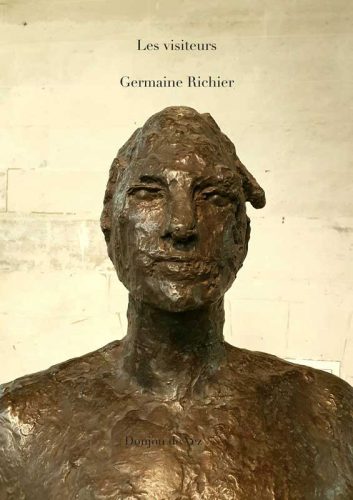
Germaine Richier's « Les visiteurs »

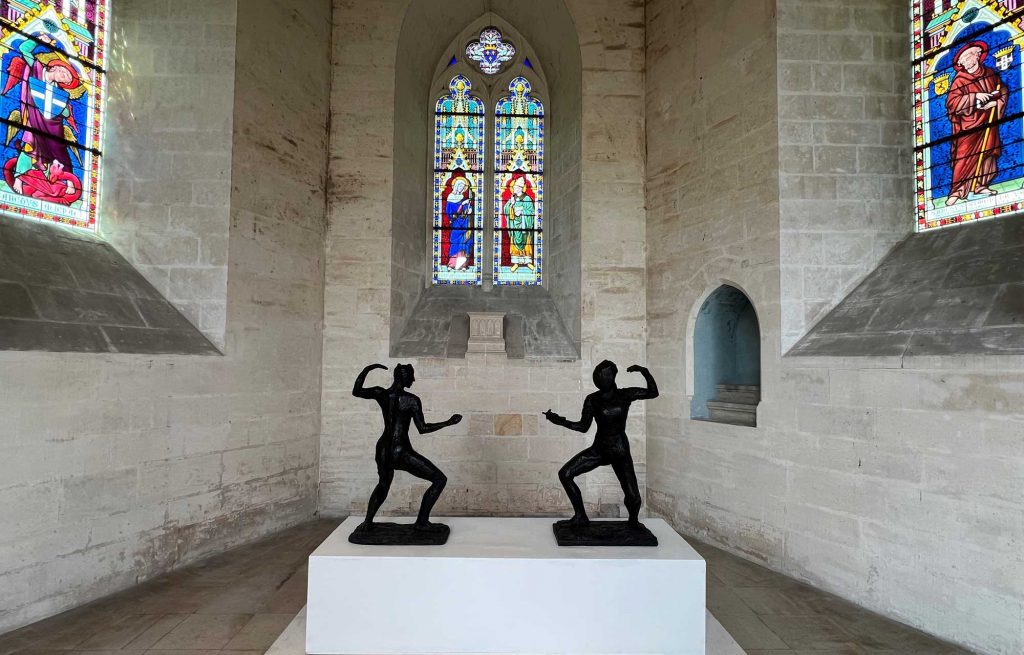
A century after their first meeting, sculptor Germaine Richier is reunited with her teacher Antoine Bourdelle at the Donjon de Vez, where her funny animal-headed visitors are escorted by the chapel's gargoyles.

An ecological visionary, the woman who was nicknamed the Sorcière royale (the royal witch), places as much value on animal life as she does on human life. Fascinated by insects, and all of those miniscule lives that she dissected and reproduced in her engravings, Germaine Richier announces the mutation of the human being with Nature. The artist's mythology is marked by a certain violence, its creatures alternating between prehistory and science-fiction. She creates transgender persons, with no identity, humanoids with grasshopper legs. Skeletal bodies where shreds of flesh are fossilised on bones to better express the passage from life to death.


Featured Image

Ye Linghan at the Donjon

On the occasion of the Paris + event, the Donjon de Vez will host an exhibition by artist Ye Linghan, in partneship with the HdM Gallery, which moved to Beijing in 2009.

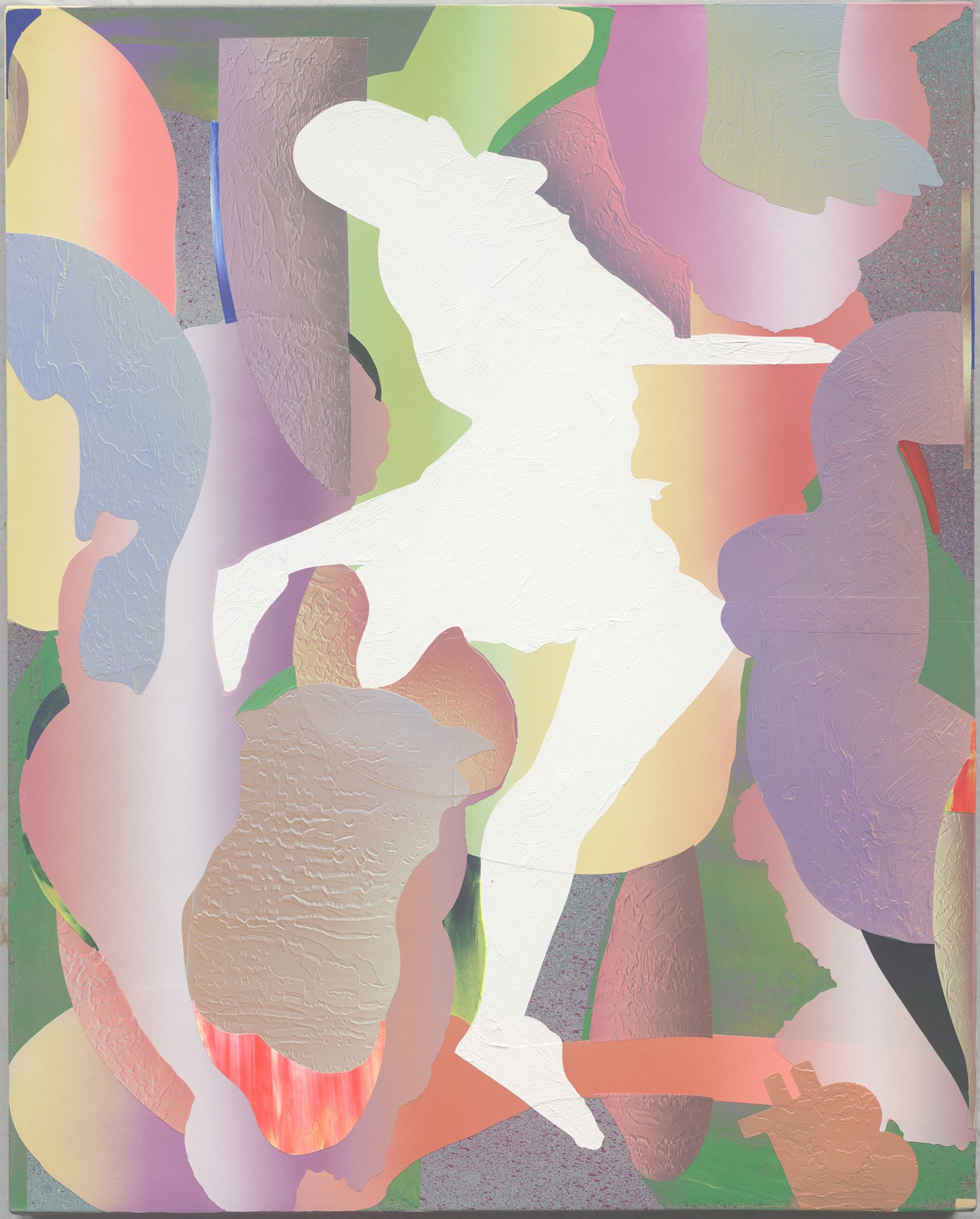
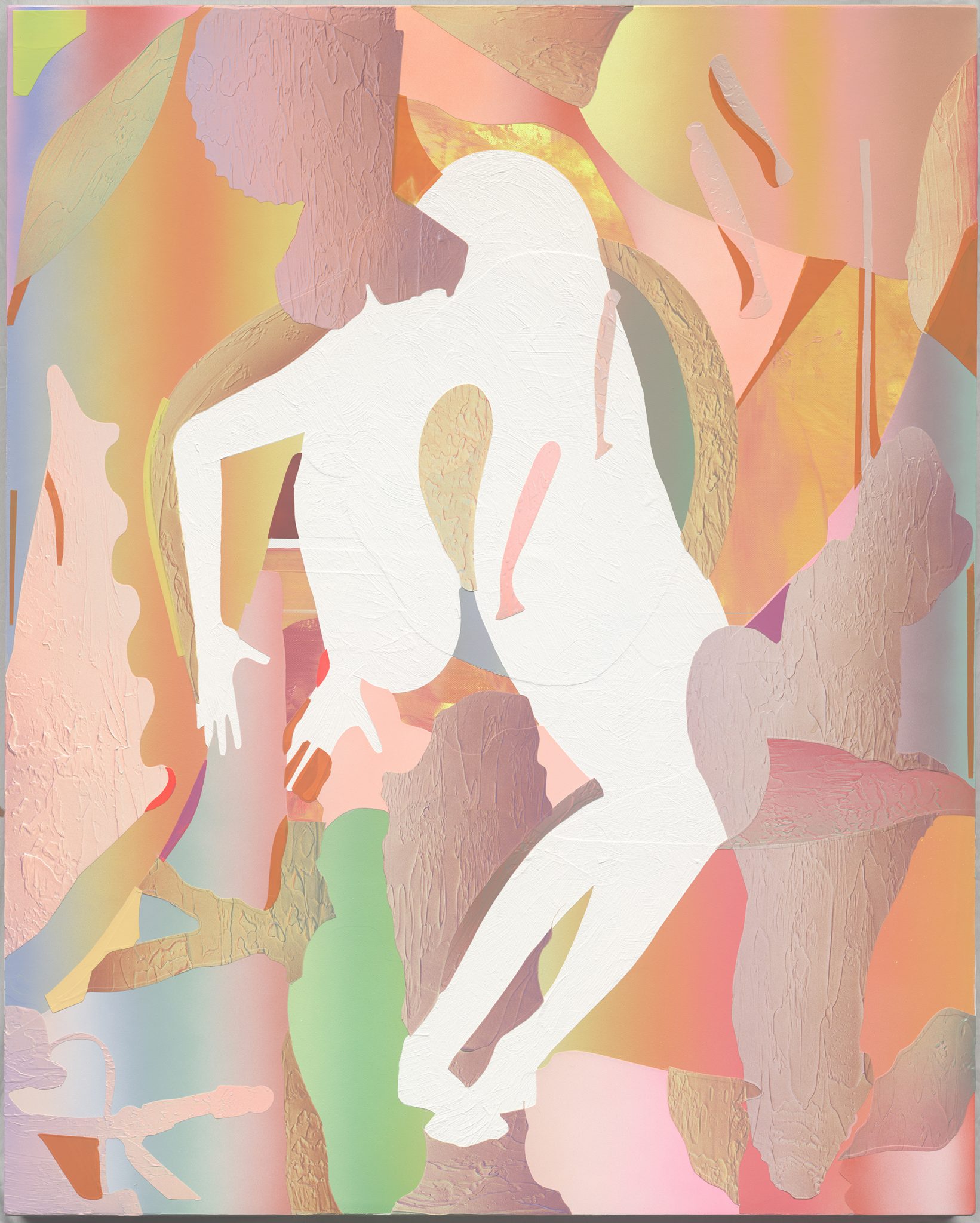
"Ye Linghan, born in 1985 in Shanghai, is one of the most noticeable artists of the contemporary Chinese artistic world. He creates large paintings which immediately catch the eye with their swirling of multicoloured shapes, inside which appear pale, diaphanous and interlaced silhouettes evocative of human figures" - Serge Lemoine

From 18 to 24 October 2022, by appointment

More information and booking : 01 42 99 20 33 – adeturenne@artcurial.com

Featured Image

Valois Emoi

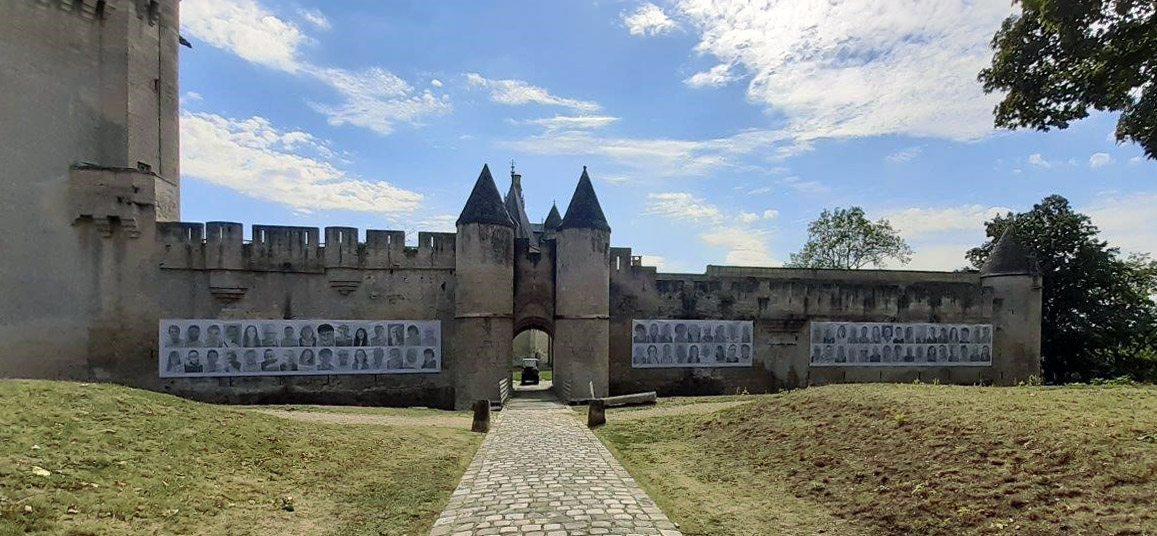
Le Donjon de Vez accueille les visages d’habitants du Pays de Valois souhaitant témoigner de leur attachement à leur territoire, au travers d’une initiative artistique internationale initiée par l’artiste JR en 2011: le projet INSIDE OUT.

Featured Image

Exhibition « Cabanes d’architectes »

This summer, the Donjon de Vez will host an exhibition dedicated to "small" examples of architecture or, as exhibition partner Philippe Gravier likes to call them, "jewels".
The models and shacks presented are authentic "gestures", at the frontier between art and architecture : the reduction in proportions allows for more creativity and freedom, and calls for a renewed concept of habitat. The style and personal imagination of each architect are deployed and echo contemporary ecological concerns regarding the rational use of materials, ressources and available living spaces.

Featured Image

Exposition "Première Mob / On n'est pas sérieux quand on a 17 ans"

On n’est pas sérieux quand on a 17 ans… Who is to say that Arthur Rimbaud wouldn't have traded his semelles de vent for a blue moped to drive down main street terrorizing the good people of Charleville ? More than any other object, the moped symbolizes the no man's land between teenager and young man : this passing age when blurred dreams flash through the mind. First moped, first kisses, and often first acne symptoms... Who hasn't felt the thrill of freedoom while accelerating with a twist of the right hand ? I may not yet be the master of the world, but I'm the king of the neighborhood when I'm driving a friend around on the luggage rack while my exhaust draws smoke spirals on the asphalt.

What would Monsieur Hulot and Rabbi Jacob be without their Solex, or Johnny Hallyday without his Paloma ?

From Schumacher's scooter to César's compression, including the Dax, Monkey, Caddy, Manhurin, Vespa, Zoomer, moped are the stars.

Practical information

The exhibition will include 25 vehicles. Scenography by Hubert Legall.

From July 1 to October 31, 2021

From July 1 to September 19, everyday from 1:30 PM to 6:30 PM.

From September 25 to October 31, on Saturdays and Sundays from 1:30 PM to 6:30 PM.